 Call Us : 08045802536Call Us : 08045802536
 English
 Spanish
 French
 German
 Italian
 Chinese (Simplified)
 Japanese
 Korean
 Arabic
 Portuguese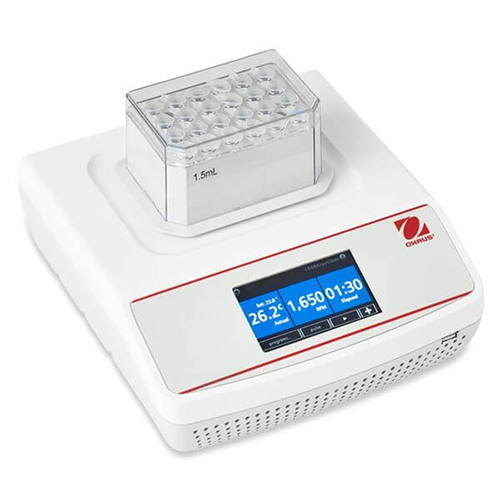
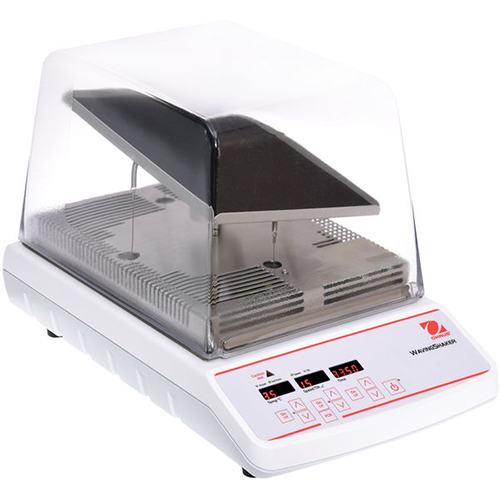
Incubating Cooling Thermal Shakers ISTHBLHTS
Product Details:
- Speed Range 100 rpm - 1200 rpm
- Features High Quality
- Control Type Manual
- Accuracy 2% speed; 0.5C at 37C
- Heating Capacity Up to 65C
- Power Supply 450 W
- Temperature Resistance Ambient +5C to 65C
- Click to View more
X
Incubating Cooling Thermal Shakers ISTHBLHTS Price And Quantity
- 1 Piece
- Triple eccentric, brushless DC
- Aluminum
- 8.9 kg
- 5C-40C, 80% RH
- 27.9 cm x 19.7 cm
- 0.5C at 37C
- Orbital, 3 mm
- 1 sec - 160 h
- 3 mm
Incubating Cooling Thermal Shakers ISTHBLHTS Product Specifications
- 450 W
- Thermal Shaker
- 230V, 5A, 50/60Hz
- Ambient +5C to 65C
- 43.2 cm x 19.7 cm x 27.9 cm
- 4 Microplates or 2 Micro-tube Racks
- Plastic & Glass
- 2% speed; 0.5C at 37C
- Laboratory
- Up to 65C
- High Quality
- Incubating Cooling Thermal Shaker
- 100 rpm - 1200 rpm
- Manual
- Triple eccentric, brushless DC
- Aluminum
- 8.9 kg
- 5C-40C, 80% RH
- 27.9 cm x 19.7 cm
- 0.5C at 37C
- Orbital, 3 mm
- 1 sec - 160 h
- 3 mm
Incubating Cooling Thermal Shakers ISTHBLHTS Trade Information
- 10 Piece Per Month
- 7 Days
Product Description
Product details
| Motion | Orbital, 3 mm |
| Capacity | 4 Microplates or 2 Micro-tube Racks |
| Temp. Range | Ambient +5C 65C |
Specification
| Motion | Orbital, 3 mm |
| Capacity | 4 Microplates or 2 Micro-tube Racks |
| Temp. Range | Ambient +5C 65C |
| Uniformity | 0.5C at 37C |
| Speed Range | 100 rpm 1200 rpm |
| Tray Size | 11 in x 7.75 in (27.9 cm x 19.7 cm) (LxW) |
| Calibration | Temperature calibration |
| Control | Digital |
| Dimensions | 17 in x 7.75 in x 11 in (43.2 cm x 19.7 cm x 27.9 cm) (LxHxW) |
| Drive System | Triple Eccentric; Brushless DC Motor |
| Net Weight | 19.6 lb (8.9 kg) |
| Orbit | 0.1 in (3 mm) |
| Power | 230V, 5A, 50/60Hz |
| Power Consumption | 450 W |
| Safety Certification | CE; TUV |
| Speed Accuracy | 2% |
| Speed Range | 100 rpm 1200 rpm |
| Timer | 1 second 160 hours |
| Tray Construction | Aluminum |
| Working Environment | 41F 104F, 80% RH, Non-condensing (5C 40C, 80% RH, Non-condensing) |
Precision Thermal Control for Lab Empowerment
Engineered to deliver outstanding uniformity, the Incubating Cooling Thermal Shaker ISTHBLHTS helps researchers effortlessly maintain and reproduce temperatures. The device's powerful heating and cooling system, combined with its uniform temperature distribution of 0.5C at 37C, makes it an ideal solution for sensitive assays and reactions.
Efficient Mixing with Orbital Motion
The orbital shaking function (3 mm orbit, up to 1200 rpm) ensures that samples experience homogeneous mixing. The triple eccentric, brushless DC drive system delivers quiet and stable agitation, critical in biological, chemical, and clinical lab processes.
Flexible Tray and Versatile Capacity
With a durable aluminum tray sized 27.9 cm x 19.7 cm, this shaker fits up to four microplates or two micro-tube racks. Its broad compatibility makes it a valuable addition for labs handling a range of sample types and experimental formats.
FAQ's of Incubating Cooling Thermal Shakers ISTHBLHTS:
Q: How do I set the temperature and mixing speed on the ISTHBLHTS thermal shaker?
A: The ISTHBLHTS features manual controls that allow precise adjustment of both temperature and mixing speed. Simply use the dedicated knobs and buttons on the control panel to select your desired temperature, within the range of ambient +5C to 65C, and adjust the speed from 100 rpm to 1200 rpm to suit your protocol requirements.Q: What types of laboratory applications benefit from using this incubating cooling thermal shaker?
A: This shaker is especially suited for applications such as enzyme reactions, bacterial and cell culture incubations, nucleic acid hybridizations, and protein studies. Its ability to maintain uniform temperatures and orbital mixing enhances reproducibility and efficiency in these procedures.Q: When should I use the cooling function versus the heating function on this shaker?
A: Use the cooling function when you need to maintain samples below room temperature for sensitive biological assays or enzyme stability tests. The heating function is ideal for applications like incubation or denaturation steps that require elevated temperatures, up to 65C.Q: Where can this thermal shaker be effectively utilized within the laboratory environment?
A: The ISTHBLHTS is designed for standard laboratory settings with an environment range of 5C to 40C and up to 80% relative humidity. Its compact dimensions make it suitable for benchtop placement in research, clinical, or industrial labs across India and globally.Q: What is the process for loading samples into the tray, and what capacity does it support?
A: To load samples, place up to four microplates or two micro-tube racks onto the aluminum tray. Secure them as per the included instructions to ensure stable mixing during operation. The generous tray size accommodates diverse sample formats, supporting a wide variety of experiments.Q: How does the uniformity and accuracy of this shaker benefit my experiments?
A: With a temperature uniformity of 0.5C at 37C and speed accuracy of 2%, the ISTHBLHTS provides highly consistent and reliable conditions. This precision minimizes variability, improving the quality of results and reproducibility of experimental protocols.Tell us about your requirement

Price:
Quantity
Select Unit
- 50
- 100
- 200
- 250
- 500
- 1000+
Additional detail
Mobile number
Email

Other Products in 'Incubating & Incubating Cooling Shakers' category

Address
OHAUS WEIGHING INDIA
GST : 27AAACO8629G1Z9
GST : 27AAACO8629G1Z9
- 1307, Lodha Supremus, Opposite Saki Vihar Telephone Exchange, Saki Vihar Road, Powai,Mumbai - 400072, Maharashtra, India
- Phone :08045802536
- Send Inquiry
 Send Inquiry
 Send Inquiry
 Send SMS
 Call Me Free
 |
OHAUS WEIGHING INDIA
All Rights Reserved.(Terms of Use) Developed and Managed by Infocom Network Private Limited. |
