 Call Us : 08045802536Call Us : 08045802536
 English
 Spanish
 French
 German
 Italian
 Chinese (Simplified)
 Japanese
 Korean
 Arabic
 Portuguese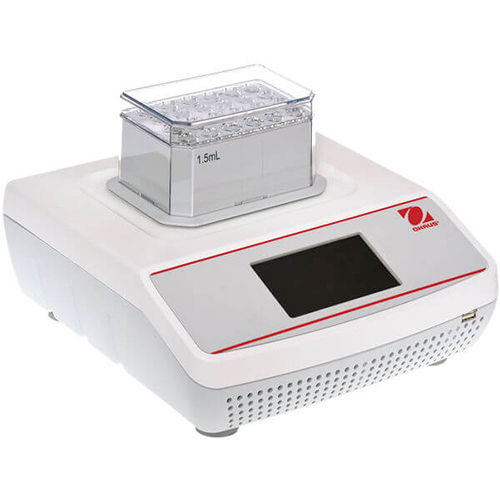
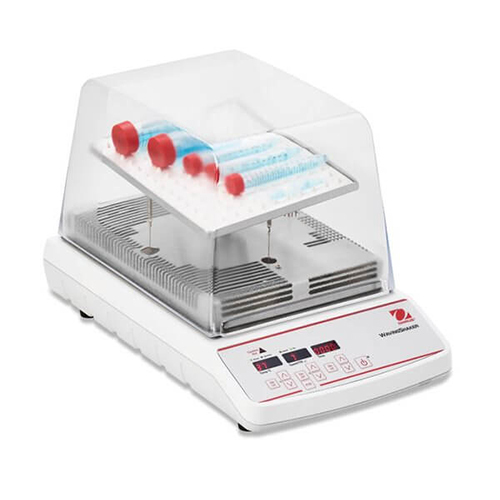
ISTHBLCTS Incubating Cooling Thermal Shakers
Product Details:
- Features High Quality
- Shape Rectangular
- Power Supply 230V, 50/60Hz
- Speed Range 100-1200 rpm
- Temperature Resistance Ambient +5C to 65C
- Heating Capacity To 65C
- Accuracy 0.5C at 37C; 2% rpm
- Click to View more
X
ISTHBLCTS Incubating Cooling Thermal Shakers Price And Quantity
- 1 Piece
- 5C-40C, 80% RH
- 19.6 lb (8.9 kg)
- 1 sec-160 hours
- 0.1 in (3 mm)
- 11 in x 7.75 in
- 2%
- Orbital, 3 mm amplitude
- Aluminum
- Triple eccentric, brushless DC
ISTHBLCTS Incubating Cooling Thermal Shakers Product Specifications
- Ambient +5C to 65C
- To 65C
- 0.5C at 37C; 2% rpm
- Holds 4 microplates or 2 micro-tube racks
- High Quality
- Rectangular
- 230V, 50/60Hz
- 100-1200 rpm
- 230V, 5A, 50/60Hz
- 17 in x 7.75 in x 11 in (43.2 cm x 19.7 cm x 27.9 cm)
- Aluminum Tray, Metal Casing
- 450 W
- Orbital Thermal Shaker
- Digital
- Laboratory
- Incubating Cooling Thermal Shaker
- Manual
- Plastic & Glass
- 5C-40C, 80% RH
- 19.6 lb (8.9 kg)
- 1 sec-160 hours
- 0.1 in (3 mm)
- 11 in x 7.75 in
- 2%
- Orbital, 3 mm amplitude
- Aluminum
- Triple eccentric, brushless DC
ISTHBLCTS Incubating Cooling Thermal Shakers Trade Information
- 10 Piece Per Month
- 7 Days
Product Description
Product details
| Motion | Orbital, 3 mm |
| Capacity | 4 Microplates or 2 Micro-tube Racks |
| Temp. Range | Ambient +5C 65C |
Specification
| Motion | Orbital, 3 mm |
| Capacity | 4 Microplates or 2 Micro-tube Racks |
| Temp. Range | Ambient +5C 65C |
| Uniformity | 0.5C at 37C |
| Speed Range | 100 rpm 1200 rpm |
| Tray Size | 11 in x 7.75 in (27.9 cm x 19.7 cm) (LxW) |
| Calibration | Temperature calibration |
| Control | Digital |
| Dimensions | 17 in x 7.75 in x 11 in (43.2 cm x 19.7 cm x 27.9 cm) (LxHxW) |
| Drive System | Triple Eccentric; Brushless DC Motor |
| Net Weight | 19.6 lb (8.9 kg) |
| Orbit | 0.1 in (3 mm) |
| Power | 230V, 5A, 50/60Hz |
| Power Consumption | 450 W |
| Safety Certification | CE; TUV |
| Speed Accuracy | 2% |
| Speed Range | 100 rpm 1200 rpm |
| Timer | 1 second 160 hours |
| Tray Construction | Aluminum |
| Working Environment | 41F 104F, 80% RH, Non-condensing (5C 40C, 80% RH, Non-condensing) |
Precision Control and Versatile Performance
The ISTHBLCTS Orbital Thermal Shaker is engineered for laboratories demanding reliable temperature control and flexible motion. Its triple eccentric drive system and brushless DC motor ensure accurate speed and gentle orbital agitation, crucial for sensitive biological and chemical samples. Designed to accommodate multiple microplates or tube racks, this shaker provides consistent results across a variety of experimental setups. Digital controls and a clear display enable precise adjustments, supporting research and testing in academic, clinical, and industrial environments.
Robust Construction and User-Friendly Design
Produced with an aluminum tray and a durable metal casing, the ISTHBLCTS Incubating Cooling Thermal Shaker stands up to daily laboratory use. The device's rectangular shape and moderate footprint make it suitable for space-conscious benchtops. Ergonomic manual controls and an easy-to-read digital display make operation straightforward for users of all experience levels. Its temperature and speed accuracy ensure confidence in every protocol, while its adaptability supports multiple laboratory applications.
FAQ's of ISTHBLCTS Incubating Cooling Thermal Shakers:
Q: How do I operate the ISTHBLCTS Incubating Cooling Thermal Shaker?
A: To operate the shaker, load your microplates or micro-tube racks onto the aluminum tray, secure them as instructed, and use the manual controls to set desired speed (100-1200 rpm), temperature (ambient +5C to 65C), and timer (1 second to 160 hours). The digital display will show all selected settings clearly.Q: What applications is this thermal shaker best suited for?
A: This device is ideal for a range of laboratory tasks, including DNA/RNA extraction, sample incubation, enzyme reactions, and cell culture. Its accurate temperature and mixing controls make it suitable for both research and clinical environments requiring reproducible results.Q: When should I use the cooling and heating features of the shaker?
A: Utilize the heating function for reactions or incubations requiring precise elevated temperatures (up to 65C). Activate the cooling (ambient +5C) when samples or reagents are temperature-sensitive and must remain below room temperature or to maintain thermal uniformity during extended processes.Q: Where can this equipment be used safely?
A: It is designed for laboratories and research facilities with environmental conditions between 5C and 40C and up to 80% relative humidity. Ensure the shaker is placed on a stable bench within these parameters to guarantee safe and reliable operation.Q: What process does the triple eccentric drive system provide?
A: The triple eccentric drive system delivers uniform orbital movement with a precise 3 mm amplitude, minimizing sample disturbance while maximizing mixing efficiency. This supports even mixing and optimal reaction kinetics for sensitive samples.Q: How does the ISTHBLCTS shaker benefit laboratory workflows?
A: This shaker streamlines sample processing by combining precision thermal control with orbital mixing, reducing manual intervention and improving consistency. Reliable speed and temperature accuracy enhance experimental reproducibility, saving time and reducing errors.Tell us about your requirement

Price:
Quantity
Select Unit
- 50
- 100
- 200
- 250
- 500
- 1000+
Additional detail
Mobile number
Email

Other Products in 'Incubating & Incubating Cooling Shakers' category

Address
OHAUS WEIGHING INDIA
GST : 27AAACO8629G1Z9
GST : 27AAACO8629G1Z9
- 1307, Lodha Supremus, Opposite Saki Vihar Telephone Exchange, Saki Vihar Road, Powai,Mumbai - 400072, Maharashtra, India
- Phone :08045802536
- Send Inquiry
 Send Inquiry
 Send Inquiry
 Send SMS
 Call Me Free
 |
OHAUS WEIGHING INDIA
All Rights Reserved.(Terms of Use) Developed and Managed by Infocom Network Private Limited. |
