 Call Us : 08045802536Call Us : 08045802536
 English
 Spanish
 French
 German
 Italian
 Chinese (Simplified)
 Japanese
 Korean
 Arabic
 Portuguese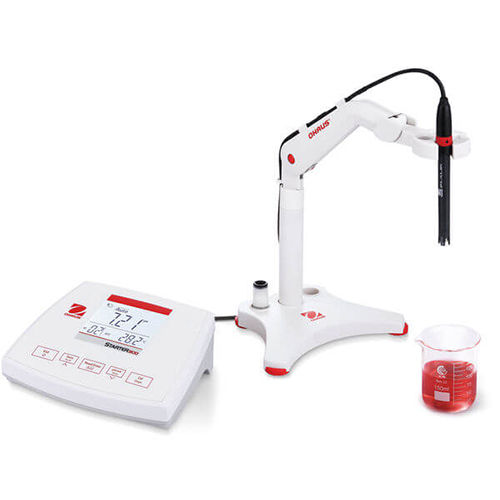
ST3100-F Starter 3100 pH Bench
Product Details:
- Features High Quality
- Control Type Manual
- Accuracy 0.01 pH, 1 mV, 0.5C
- Display Type LCD with backlight
- Type pH Bench Meter
- Dimension (L*W*H) 220 mm x 78 mm x 175 mm
- Equipment Type Bench pH Meter
- Click to View more
X
ST3100-F Starter 3100 pH Bench Price And Quantity
- 1 Piece
- -5C to 110C
- 0.1C
- ST310 Included
- pH/ORP
- 1 mV
- 0.01 pH
- 30 k NTC
- -2.00 to 16.00 pH
- -1999 to 1999 mV
- Included
- Automatic
- 0.75 kg
- 5-40C, 80% RH
- 3 Point
ST3100-F Starter 3100 pH Bench Product Specifications
- 0.01 pH, 1 mV, 0.5C
- Manual
- LCD with backlight
- pH Bench Meter
- Laboratory
- Plastic & Glass
- 220 mm x 78 mm x 175 mm
- AC Adapter (Included)
- High Quality
- Bench pH Meter
- -5C to 110C
- 0.1C
- ST310 Included
- pH/ORP
- 1 mV
- 0.01 pH
- 30 k NTC
- -2.00 to 16.00 pH
- -1999 to 1999 mV
- Included
- Automatic
- 0.75 kg
- 5-40C, 80% RH
- 3 Point
ST3100-F Starter 3100 pH Bench Trade Information
- 100 Piece Per Month
- 7 Days
Product Description
Product details
| Measurement Range | -5 C 110 C;-2.00 16.00 pH;-1999 1999 mV |
| Accuracy | 0.5 C;1 mV;0.01 pH |
| Measurement Resolution | 0.1 C;0.01 pH;1 mV |
| Item Number: | 30058489 |
Specification
| Measurement Range | -5 C 110 C; -2.00 16.00 pH; -1999 1999 mV |
| Accuracy | 0.5 C; 1 mV; 0.01 pH |
| Measurement Resolution | 0.1 C; 0.01 pH; 1 mV |
| Display | LCD with backlight |
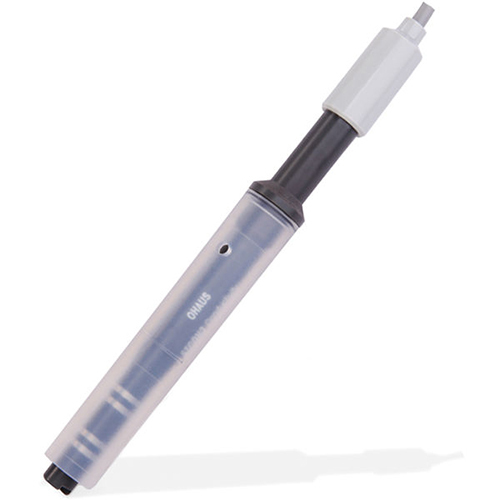
| Electrode | ST310 (Included) |
| Accuracy (mV) | 1 mV |
| Accuracy (Temperature) | 0.5 C |
| Battery Life | Not Applicable |
| Calibration | 3 Point |
| Dimensions | 8.66 in x 3.07 in x 6.89 in (220 mm x 78 mm x 175 mm) (LxHxW) |
| In-Use Cover | Included |
| Measurement Range (Temperature) | -5 C 110 C |
| Measurement Range | -1,999 mV 1,999 mV |
| Net Weight | 1.65 lb (0.75 kg) |
| Parameter | pH / ORP |
| pH accuracy () | 0.01 |
| pH measuring range | -2 16 |
| pH resolution | 0.01 |
| Power | AC Adapter (Included) |
| Resolution (Voltage) | 1 mV |
| Temperature compensation | Yes |
| Temperature resolution | 0.1 C |
| Temperature Sensor | 30 K NTC |
| Working Environment | 41F 104F, 80% RH, Non-condensing (5C 40C, 80% RH, Non-condensing) |
Accurate & Reliable Laboratory Measurements
Built for laboratory environments, the ST3100-F Starter 3100 pH Bench Meter delivers excellent measurement precision and reliability. With high accuracy for pH, mV, and temperature, as well as an easy-to-read LCD display, users can trust their results for various analytical needs. Automatic temperature compensation ensures consistency, even in fluctuating lab conditions.
Simple Operation and Calibration
The device supports a hassle-free 3-point calibration for optimal accuracy, while its manual control type enables precise operation. Its intuitive design means laboratory staff can quickly begin measurements, and the included ST310 electrode is ready to use straight out of the box.
Versatile Application and Robust Design
Engineered for broad applicability, this bench pH meter can be used for pH and ORP evaluation in chemical, environmental, food, and educational laboratories. With its solid plastic and glass composition and protective in-use cover, the ST3100-F stands up to daily laboratory demands in India and beyond.
FAQ's of ST3100-F Starter 3100 pH Bench:
Q: How should I calibrate the ST3100-F Starter 3100 pH Bench Meter?
A: The ST3100-F supports 3-point calibration for enhanced pH accuracy. Simply follow the on-screen prompts to calibrate with standard buffer solutions at three different pH values to ensure reliable and precise readings.Q: What makes the ST3100-F suitable for laboratory use?
A: This meter offers high-resolution measurements (0.01 pH, 1 mV, 0.1C), automatic temperature compensation, and comes with an included ST310 electrode and in-use cover. Its robust construction from plastic and glass, along with wide measurement ranges, make it ideal for rigorous laboratory applications.Q: When should the electrode or temperature sensor be replaced?
A: Electrodes typically should be replaced if accuracy diminishes or after extended use, depending on application frequency and sample types. The 30 k NTC temperature sensor ensures accurate compensation and should be checked periodically for continued performance.Q: Where can the ST3100-F be used within a laboratory environment?
A: This bench meter is suitable for any regulated laboratory setting with ambient conditions between 5C and 40C and humidity under 80%. Its compact footprint makes it easy to position on lab benches, and the provided in-use cover helps protect against spills or dust.Q: What is the process for measuring pH and temperature with this bench meter?
A: Connect the ST310 electrode and the temperature sensor, immerse them in your sample, and ensure calibration is completed. The meter's LCD will display pH or ORP values and temperature simultaneously, using automatic temperature compensation for dependable results.Q: How does automatic temperature compensation benefit measurement accuracy?
A: Automatic temperature compensation corrects for temperature-induced deviations in pH or ORP readings, ensuring measurement consistency and reducing manual calculation errors, particularly in varying laboratory conditions.Tell us about your requirement

Price:
Quantity
Select Unit
- 50
- 100
- 200
- 250
- 500
- 1000+
Additional detail
Mobile number
Email

Other Products in 'Water Analysis Meters & Electrodes' category

Address
OHAUS WEIGHING INDIA
GST : 27AAACO8629G1Z9
GST : 27AAACO8629G1Z9
- 1307, Lodha Supremus, Opposite Saki Vihar Telephone Exchange, Saki Vihar Road, Powai,Mumbai - 400072, Maharashtra, India
- Phone :08045802536
- Send Inquiry
 Send Inquiry
 Send Inquiry
 Send SMS
 |
OHAUS WEIGHING INDIA
All Rights Reserved.(Terms of Use) Developed and Managed by Infocom Network Private Limited. |
