 Call Us : 08045802536Call Us : 08045802536
 English
 Spanish
 French
 German
 Italian
 Chinese (Simplified)
 Japanese
 Korean
 Arabic
 Portuguese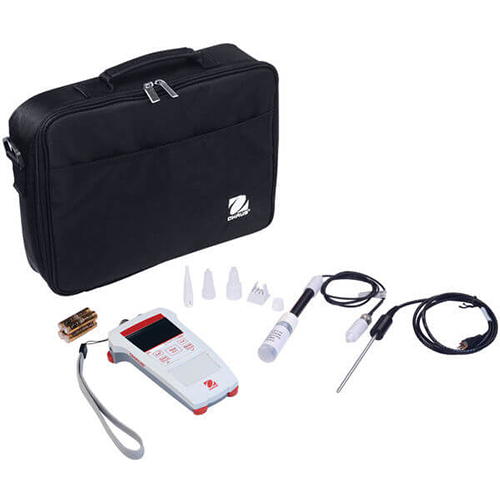
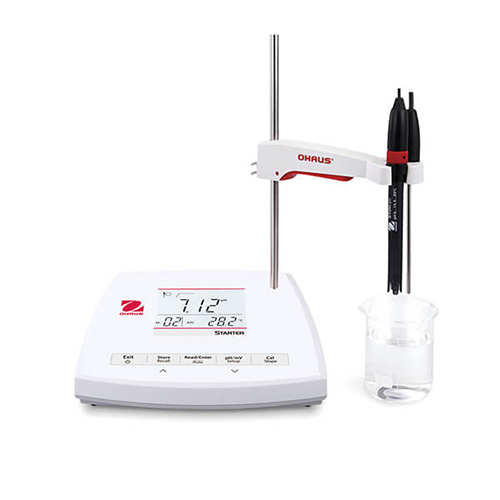
ST300D-G Starter 300D DO Portable
34671 INR/Piece
Product Details:
- Control Type Manual
- Features High Quality
- Display Type LCD
- Accuracy 0.3 C (Temperature) / 0.5 % (Conductivity)
- Type Portable Conductivity Meter
- Dimension (L*W*H) 170 mm x 35 mm x 90 mm
- Equipment Type Digital DO Meter
- Click to View more
X
ST300D-G Starter 300D DO Portable Price And Quantity
- 34671 INR/Piece
- 1 Piece
- Automatic
- 5-40C, 80% RH
- 30 K NTC
- No
- 0.01 S/cm-199.9 mS/cm
- Conductivity, TDS
- 1 Point
- 0.16 kg
- 0C 100C
- 0.1 mg/L - 199.9 g/L
- 0.01 S/cm; 0.1 mg/L; 0.1 C
- 0.01 1
- STCON3 Included
ST300D-G Starter 300D DO Portable Product Specifications
- Plastic & Glass
- Manual
- 4 AAA (LR03) Batteries (Included)
- Laboratory
- 170 mm x 35 mm x 90 mm
- 0.3 C (Temperature) / 0.5 % (Conductivity)
- Portable Conductivity Meter
- LCD
- Digital DO Meter
- High Quality
- Automatic
- 5-40C, 80% RH
- 30 K NTC
- No
- 0.01 S/cm-199.9 mS/cm
- Conductivity, TDS
- 1 Point
- 0.16 kg
- 0C 100C
- 0.1 mg/L - 199.9 g/L
- 0.01 S/cm; 0.1 mg/L; 0.1 C
- 0.01 1
- STCON3 Included
ST300D-G Starter 300D DO Portable Trade Information
- 100 Piece Per Month
- 7 Days
Product Description
Product details
| Measurement Range | 00.0 S/cm 199.9 mS/cm;0 100C;0.1 mg/L 199.9 g/L (TDS) |
| Measurement Resolution | 0.1 C;0.01 S/cm;0.1 mg/L |
| Display | LCD |
| Item Number: | 30219115 |
Specification
| Measurement Range | 00.0 S/cm 199.9 mS/cm; 0 100C; 0.1 mg/L 199.9 g/L (TDS) |
| Measurement Resolution | 0.1 C; 0.01 S/cm; 0.1 mg/L |
| Display | LCD |
| Electrode | STCON3 (Included) |
| Accuracy (Temperature) | 0.3 C |
| Battery Life | 250 Hours with Disposable Batteries |
| Calibration | 1 Point |
| Conductivity accuracy () | 0.5 % |
| Conductivity measuring range | 0.01 S/cm-199.9 mS/cm |
| Dimensions | 6.69 in x 1.38 in x 3.54 in (170 mm x 35 mm x 90 mm) (LxHxW) |
| In-Use Cover | No |
| Measurement Range (Temperature) | 0 C 100 C |
| Net Weight | 0.35 lb (0.16 kg) |
| Parameter | Conductivity / TDS |
| Power | 4 AAA (LR03) Batteries (Included) |
| Resolution Cond. (Variable) | 0.01 1 |
| Temperature compensation | Automatic |
| Temperature resolution | 0.1 C |
| Temperature Sensor | 30 K NTC |
| Working Environment | 41F 104F, 80% RH, Non-condensing (5C 40C, 80% RH, Non-condensing) |
Reliable and Accurate Measurements
Designed to meet rigorous laboratory standards, this portable conductivity meter offers precise measurement of conductivity, TDS, and temperature. With a resolution as fine as 0.01 S/cm and 0.1 mg/L for TDS, it's ideal for scientific analysis and quality control tasks. Automatic temperature compensation guarantees correct readings regardless of environmental fluctuations.
Convenient Portability and Long Battery Life
Weighing just 0.16 kg, this meter is easily transportable, making it an excellent choice for professionals who need to conduct on-site water quality checks. Powered by four AAA batteries (included) with up to 250 hours of operational time, it ensures extended use without frequent battery changes.
Versatile Applications for Diverse Needs
Suitable for laboratory, educational, and industrial applications, the Starter 300D DO allows users to measure conductivity and TDS in a variety of samples. Its wide measuring and temperature range, along with robust material construction, provides flexibility and reliability in multiple scenarios.
FAQ's of ST300D-G Starter 300D DO Portable:
Q: How do I calibrate the ST300D-G Starter 300D DO Portable Conductivity Meter?
A: Calibration of the ST300D-G is a straightforward process, requiring only a single-point calibration. Follow the user manual to immerse the included STCON3 electrode in the calibration solution, select the calibration mode, and let the meter automatically adjust itself for accurate readings.Q: What applications is this portable conductivity meter suitable for?
A: This device is designed for laboratory use, but its durable and portable design also makes it suitable for educational, industrial, and field-testing applications where quick and accurate measurements of conductivity, TDS, and temperature are needed.Q: When should I replace the batteries in the device?
A: The meter operates on four AAA batteries and typically provides up to 250 hours of use. Replace the batteries when you notice a low battery indicator on the LCD display or if the device performance starts to decline.Q: Where can I use the ST300D-G in terms of environmental conditions?
A: The working environment for optimal performance is between 5C and 40C with up to 80% relative humidity. Avoid using the device outside these parameters to ensure measurement accuracy and device longevity.Q: What is the benefit of automatic temperature compensation in this meter?
A: Automatic temperature compensation ensures your conductivity and TDS measurements remain accurate, regardless of variations in sample temperature, thus improving reliability and reducing the possibility of user error.Q: How does the included STCON3 electrode enhance measurement accuracy?
A: The STCON3 electrode is specifically designed for high-precision conductivity and TDS measurements. Its compatibility with the meter guarantees stable readings and simplifies the calibration process, increasing overall measurement reliability.Tell us about your requirement

Price:
Quantity
Select Unit
- 50
- 100
- 200
- 250
- 500
- 1000+
Additional detail
Mobile number
Email

Other Products in 'Water Analysis Meters & Electrodes' category

Address
OHAUS WEIGHING INDIA
GST : 27AAACO8629G1Z9
GST : 27AAACO8629G1Z9
- 1307, Lodha Supremus, Opposite Saki Vihar Telephone Exchange, Saki Vihar Road, Powai,Mumbai - 400072, Maharashtra, India
- Phone :08045802536
- Send Inquiry
 Send Inquiry
 Send Inquiry
 Send SMS
 Call Me Free
 |
OHAUS WEIGHING INDIA
All Rights Reserved.(Terms of Use) Developed and Managed by Infocom Network Private Limited. |
