 Call Us : 08045802536Call Us : 08045802536
 English
 Spanish
 French
 German
 Italian
 Chinese (Simplified)
 Japanese
 Korean
 Arabic
 Portuguese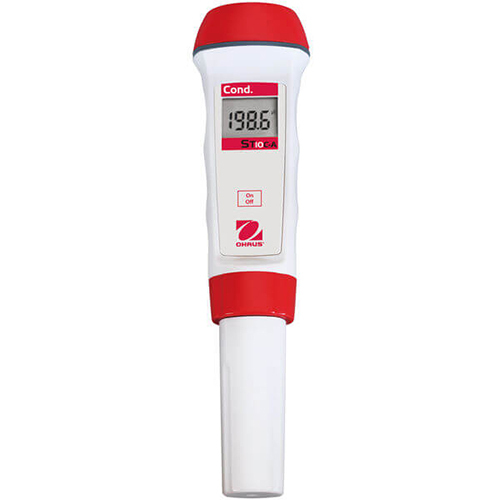
ST10T-A Starter Pen Meters
Product Details:
- Accuracy 2.5% FS
- Display Type LCD
- Features High Quality
- Control Type Manual
- Temperature Resistance 50F-104F (10C-40C), 85% RH, non-condensing
- Shape Pen type
- Type TDS Meter
- Click to View more
X
ST10T-A Starter Pen Meters Price And Quantity
- 1 Piece
- After 6 mins
- 0.1 mg/L
- 200 hours
- 1
- 0.0-100.0 mg/L
- Included
- 110 g (3.88 oz)
- 10-40C, 85% RH
- 2.5 %
- IP67 waterproof
- 0.0-100.0 mg/L
ST10T-A Starter Pen Meters Product Specifications
- 2.5% FS
- LCD
- TDS Meter
- Manual
- 50F-104F (10C-40C), 85% RH, non-condensing
- Pen type
- Plastic & Glass
- Laboratory
- 4 AG13 Batteries (Included)
- High Quality
- 38 mm x 185 mm x 45 mm (1.5 in x 7.28 in x 1.77 in)
- After 6 mins
- 0.1 mg/L
- 200 hours
- 1
- 0.0-100.0 mg/L
- Included
- 110 g (3.88 oz)
- 10-40C, 85% RH
- 2.5 %
- IP67 waterproof
- 0.0-100.0 mg/L
ST10T-A Starter Pen Meters Trade Information
- 100 Piece Per Month
- 7 Days
Product Description
Product details
| Meter Type | TDS |
| Measurement Range | 0.0 100.0 mg/L |
| Accuracy | 2.5% FS |
| Item Number: | 30073978 |
Specification
| Meter Type | TDS |
| Measurement Range | 0.0 100.0 mg/L |
| Accuracy | 2.5% FS |
| Measurement Resolution | 0.1 mg/L |
| Display | LCD |
| ATC | Not Applicable |
| Temperature compensation | Not applicable |
| Automatic Shutdown | Yes, After 6 minutes of non-use |
| Battery Life | 200 Hours with Disposable Batteries |
| Calibration | NA |
| Conductivity accuracy () | 2.5 % |
| Conductivity measuring range | 0.0 100.0 mg/L |
| Dimensions | 1.5 in x 7.28 in x 1.77 in (38 mm x 185 mm x 45 mm) (LxHxW) |
| Net Weight | 3.88 oz (110 g) |
| Number of Buttons | 1 |
| Power | 4 AG13 Batteries (Included) |
| Protection Rating | IP67 |
| Temperature Display | Not Applicable |
| Working Environment | 50F 104F, 85%RH, non-condensing (10C 40C, 85% RH, non-condensing) |
| Wrist Strap | Yes |
Precise and Reliable TDS Measurements
Engineered for accuracy and convenience, the ST10T-A Starter Pen Meter offers consistent conductivity measurements with 0.1 mg/L resolution. Utilizing this pen meter helps laboratories ensure the integrity of water quality or solution concentration with minimal effort. Its 2.5% full-scale accuracy ensures dependable readings, essential for quality control and scientific research.
User-Friendly Design for Everyday Use
The pen meter's single-button control and clear LCD display make operation straightforward, even for new users. With its compact form and included wrist strap, this instrument is both portable and practical. An automatic 6-minute shutdown feature maximizes battery life, ensuring the device is ready when you need it most without constant battery replacement.
Durability and Versatility in Application
Constructed from premium plastic and glass, the ST10T-A Starter Pen Meter is IP67-rated for waterproof performance, supporting a wide range of laboratory and environmental testing needs. Its robust design and operational tolerance to both temperature and humidity extremes allow for use in diverse conditions, making it the first choice for professionals involved in distribution, export, or laboratory work.
FAQ's of ST10T-A Starter Pen Meters:
Q: How do I use the ST10T-A Starter Pen Meter for TDS measurements?
A: To use the ST10T-A, immerse the pen tip into your sample solution within the specified range (0.0-100.0 mg/L), then press the single button to power on. The LCD display will show the TDS reading, accurate to 0.1 mg/L, within seconds.Q: What are the recommended conditions for operating this meter?
A: The meter operates best in environments with temperatures between 10C and 40C (50F-104F) and relative humidity up to 85% (non-condensing). Avoid using the device outside these limits for optimal accuracy and longevity.Q: When does the automatic shutdown function activate?
A: The automatic shutdown feature activates after 6 minutes of inactivity, preserving battery life and ensuring efficient use during laboratory routines.Q: Where can the ST10T-A Starter Pen Meter be applied?
A: This pen meter is ideal for laboratory environments, quality control settings, and water testing facilities. Its IP67 waterproof rating allows it to be used safely in damp or wet areas, common in laboratory and industrial use.Q: What is the battery life and replacement process for this meter?
A: The ST10T-A operates with four AG13 batteries, which are included and provide up to 200 hours of operation. When replacement is needed, simply open the battery compartment, swap out the old batteries, and resume testing.Q: How does the meter's protection rating benefit users?
A: With an IP67 rating, the meter is fully protected against dust and can withstand water immersion up to 1 meter, making it reliable for use in harsh laboratory and field conditions.Q: What advantages does the pen-type design offer for professionals?
A: The pen-type construction ensures the meter is lightweight, portable, and easy to use with one hand, making it convenient for fieldwork, sampling, and routine laboratory tasks.Tell us about your requirement

Price:
Quantity
Select Unit
- 50
- 100
- 200
- 250
- 500
- 1000+
Additional detail
Mobile number
Email

Other Products in 'Water Analysis Meters & Electrodes' category

Address
OHAUS WEIGHING INDIA
GST : 27AAACO8629G1Z9
GST : 27AAACO8629G1Z9
- 1307, Lodha Supremus, Opposite Saki Vihar Telephone Exchange, Saki Vihar Road, Powai,Mumbai - 400072, Maharashtra, India
- Phone :08045802536
- Send Inquiry
 Send Inquiry
 Send Inquiry
 Send SMS
 Call Me Free
 |
OHAUS WEIGHING INDIA
All Rights Reserved.(Terms of Use) Developed and Managed by Infocom Network Private Limited. |
