 Call Us : 08045802536Call Us : 08045802536
 English
 Spanish
 French
 German
 Italian
 Chinese (Simplified)
 Japanese
 Korean
 Arabic
 Portuguese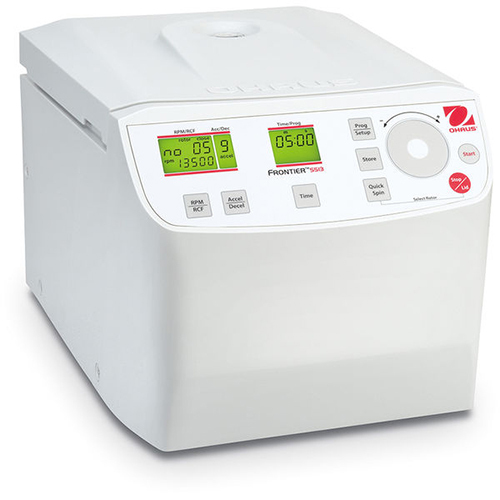
FC5513 230V Frontier 5000 Series Micro
Product Details:
- Control Type Manual
- Speed Range 200 rpm - 13,500 rpm
- Display Type LCD with backlight
- Features High Quality
- Type Micro Centrifuge
- Dimension (L*W*H) 356 mm x 236 mm x 277 mm (14 x 9.3 x 10.9 in)
- Power AC Power (Included)
- Click to View more
X
FC5513 230V Frontier 5000 Series Micro Price And Quantity
- 1 Piece
- Mechanical
- 24 capillaries compatible
- 17,317 xg
- Angle rotor, 24x1.5/2.0ml
- 602 dB(A)
- 2C-35C
- Manual
- 10 levels
- 10 levels
- 12.6 kg
- Continuous, Quickspin
- 80% RH, non-condensing
- 10 sec - 99h 59m 59s
- 170W
FC5513 230V Frontier 5000 Series Micro Product Specifications
- AC Power (Included)
- High Quality
- Laboratory
- 230V
- 356 mm x 236 mm x 277 mm (14 x 9.3 x 10.9 in)
- Manual
- LCD with backlight
- Micro Centrifuge
- Plastic & Glass
- 200 rpm - 13,500 rpm
- 24 x 1.5/2.0 ml
- Mechanical
- 24 capillaries compatible
- 17,317 xg
- Angle rotor, 24x1.5/2.0ml
- 602 dB(A)
- 2C-35C
- Manual
- 10 levels
- 10 levels
- 12.6 kg
- Continuous, Quickspin
- 80% RH, non-condensing
- 10 sec - 99h 59m 59s
- 170W
FC5513 230V Frontier 5000 Series Micro Trade Information
- 100 Piece Per Month
- 7 Days
Product Description
Product details
| Speed Range | 200 rpm 13,500 rpm |
| Maximum Relative Centrifuge Force (x g) | 17,317 g |
| Maximum Capacity(Rotor) | 24 x 1.5 / 2.0 ml |
| Item Number: | 30393187 |
Specification
| Speed Range | 200 rpm 13,500 rpm |
| Maximum Relative Centrifuge Force (x g) | 17,317 g |
| Maximum Capacity(Rotor) | 24 x 1.5 / 2.0 ml |
| Program memories | 99 |
| Rotor In Package | Not applicable |
| Acceleration Gear | 10 |
| Deceleration Gear | 10 |
| Dimensions | 14 in x 9.3 in x 10.9 in (356 mm x 236 mm x 277 mm) (LxHxW) |
| Display | LCD with backlight |
| Lid lock | Mechanical |
| Net Weight | 27.8 lb (12.6 kg) |
| Noise Level | 602 dB(A) |
| Power | AC Power (Included) |
| Power Consumption | 170 W |
| Pre-cool time | Not applicable |
| Rotor Compatibility | Rotor Angle 24x1.5/2.0ml ID BIOSEALS V1; Hematocrit rotor, 24 Capillaries |
| Rotor Recognition Method | Manual |
| Running Time | Continous; Quickspin; 10 sec to 99 h 59 min 59 sec |
| Safety Certification | CE; FCC |
| Working Environment | 36F 95F, 80%RH, non-condensing (2C 35C, 80%RH, non-condensing) |
Precision and Versatility for Every Laboratory
The FC5513 Micro Centrifuge offers outstanding flexibility with its wide speed and RCF range, accommodating both micro-volume tubes and hematocrit testing. The angle rotor supports up to 24 x 1.5/2.0 ml tubes, making it ideal for various routine and specialized laboratory applications, from biomedical analysis to molecular biology tasks.
User-Friendly and Reliable Operation
Designed with an intuitive manual interface, this unit features easy-to-read LCD backlit displays, mechanical lid lock, and manual rotor recognition. With 10 acceleration/deceleration levels, running modes like Continuous and Quickspin, and an extended timer range, you can tailor operation for specific protocols while ensuring safety and reproducible results.
FAQ's of FC5513 230V Frontier 5000 Series Micro:
Q: How do I select the correct rotor type for the FC5513 Micro Centrifuge?
A: The FC5513 supports both angle rotors (24 x 1.5/2.0 ml tubes) and hematocrit rotors (24 capillaries). Rotor selection depends on your application-use the angle rotor for general microtube processing and the hematocrit rotor for capillary blood samples. Rotor recognition is manual, so always verify correct installation before use.Q: What is the process for operating the FC5513 centrifuge?
A: Begin by loading the samples evenly into the appropriate rotor and securing the lid using the mechanical lock. Use the manual controls to set speed (200-13,500 rpm), acceleration/deceleration profiles, and run time (from 10 seconds up to 99 hours). Monitor progress on the LCD backlight display, and select either continuous run or Quickspin mode as needed.Q: Where can the FC5513 Micro Centrifuge be installed?
A: This centrifuge is best suited for laboratory environments with ambient temperatures between 2C and 35C and humidity levels up to 80% RH (non-condensing). Ensure it's placed on a stable surface measuring at least 356 mm (L) x 236 mm (W) x 277 mm (H) and connected to 230V AC power.Q: What are the benefits of using the FC5513 centrifuge for laboratory workflows?
A: This model delivers fast, efficient sample separations, with a high maximum RCF, adjustable speed, and programmable timing, enhancing productivity and reliability. Its flexibility in rotor compatibility and precise control features make it suitable for a range of laboratory protocols, improving workflow efficiency and result accuracy.Q: When should I use the quickspin mode on the FC5513?
A: Quickspin mode is ideal for short, rapid separations or quick pelleting procedures. It's particularly useful when you need only brief centrifugation intervals rather than a full programmed run, saving time for high-throughput processes.Q: What safety features are included in the FC5513 centrifuge?
A: The FC5513 is equipped with a robust mechanical lid lock system to ensure safe operation, as well as manual rotor recognition and multiple acceleration/deceleration profiles to accommodate different sample types while reducing risk during operation.Tell us about your requirement

Price:
Quantity
Select Unit
- 50
- 100
- 200
- 250
- 500
- 1000+
Additional detail
Mobile number
Email

Other Products in 'Centrifuges' category

Address
OHAUS WEIGHING INDIA
GST : 27AAACO8629G1Z9
GST : 27AAACO8629G1Z9
- 1307, Lodha Supremus, Opposite Saki Vihar Telephone Exchange, Saki Vihar Road, Powai,Mumbai - 400072, Maharashtra, India
- Phone :08045802536
- Send Inquiry
 Send Inquiry
 Send Inquiry
 Send SMS
 Call Me Free
 |
OHAUS WEIGHING INDIA
All Rights Reserved.(Terms of Use) Developed and Managed by Infocom Network Private Limited. |
